When a military institution—tasked primarily with national defense—oversteps its constitutional or institutional boundaries by involving itself in political processes such as selecting a head of government (e.g., a Prime Minister), it risks profound systemic consequences. Below is a systematic analysis of the implications, including pros (often short-term or perceived), cons (typically long-term and structural), and the cascading disasters such behavior can trigger.
I. Core Institutional Role vs. Political Interference
Mandate of the Military: Defend territorial integrity, deter external threats, support civil authorities in emergencies (e.g., disasters), and operate under civilian control in democratic systems.
Deviation: Involvement in political leadership selection violates the principle of civilian supremacy, a cornerstone of modern democracies.
II. Perceived “Pros” (Short-Term or Illusory Benefits)
Note: These are rarely sustainable and often mask deeper institutional decay.
Perceived Stability:
Military may justify intervention by claiming to prevent chaos or corruption.
Reality: Stability is superficial; legitimacy is eroded.
Rapid Decision-Making:
Military hierarchies enable fast action without parliamentary debate.
Reality: Speed ≠ wisdom; bypasses accountability and public mandate.
National Unity Narrative:
Portrays itself as “above politics,” acting in the “national interest.”
Reality: Undermines pluralism and democratic consensus-building.
III. Cons and Systemic Risks (Long-Term Disasters)
A. Erosion of Democratic Norms
Constitutional Breakdown: Undermines rule of law; sets precedent for future coups or interventions.
Legitimacy Crisis: Government lacks popular mandate → weak policy implementation, civil unrest.
Institutional Decay: Judiciary, parliament, and electoral bodies become subservient or irrelevant.
B. Degradation of Military Effectiveness
Mission Creep: Focus shifts from defense to internal politics → training, readiness, and morale suffer.
Resource Diversion: Budgets redirected to surveillance, internal control, or patronage networks.
Loss of Professionalism: Promotions based on loyalty to regime vs. merit → tactical/strategic incompetence.
C. National Security Vulnerabilities
External Perception: Seen as unstable → deters investment, weakens alliances (e.g., NATO, UN cooperation).
Internal Fragmentation: Factions within military may emerge (pro-/anti-regime), risking civil conflict.
Intelligence Failure: Political priorities distort threat assessment (e.g., ignoring external threats to suppress dissent).
D. Economic and Social Collapse
Sanctions & Isolation: International bodies (UN, IMF, World Bank) may impose sanctions.
Capital Flight: Investors flee due to unpredictability.
Brain Drain: Skilled citizens emigrate; civil society weakens.
E. Historical Precedents of Disaster
Pakistan: Repeated military interventions (1958, 1977, 1999) led to democratic stagnation, economic crises, and strategic blunders (e.g., Kargil War).
Myanmar (2021): Coup reversed a decade of democratic progress; triggered civil war, economic freefall, and humanitarian crisis.
Egypt (2013): Military-backed removal of elected president led to repression, terrorism resurgence, and regional instability.
IV. Cascading Failures if the Army “Fails as an Institution”
If politicization leads to institutional decay:
Defensive Incompetence: Inability to respond to invasions, insurgencies, or hybrid warfare.
Loss of Public Trust: Citizens no longer see military as protector → resistance to conscription, intelligence cooperation.
State Fragmentation: Rise of militias, warlordism, or secessionist movements in power vacuum.
Total State Failure: As seen in Somalia (1991) or Sudan—collapse of central authority, humanitarian catastrophe.
V. Conclusion: The Iron Law of Civil-Military Relations
“A military that governs cannot defend; a military that defends must not govern.”
Political involvement corrupts the military’s core purpose. While it may appear to offer order in the short term, it systematically undermines national security, democratic resilience, economic vitality, and social cohesion. The disasters are not hypothetical—they are historical inevitabilities observed across continents and centuries.
The strongest armies in the world (e.g., U.S., Germany, Japan post-WWII) are those firmly subordinated to elected civilian leadership. Their power lies not in ruling, but in refraining from ruling.
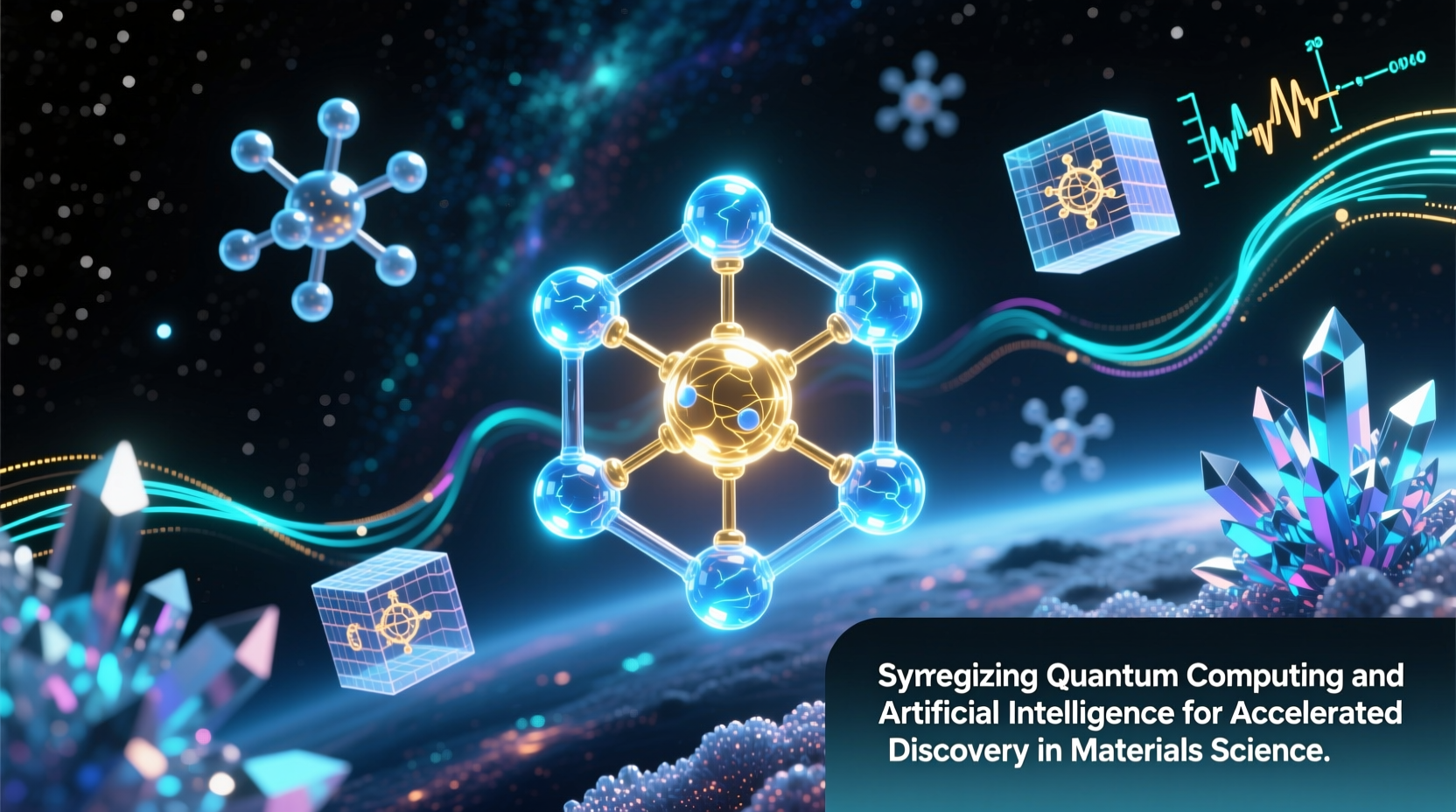
Synergizing Quantum Computing and Artificial Intelligence for Accelerated Discovery in Materials Science
Abstract The convergence of quantum computing and artificial intelligence (AI)—collectively termed Quantum Machine Learning (QML)—is opening transformative pathways in scientific discovery, particularly in materials science. This interdisciplinary fusion leverages quantum mechanical phenomena such as superposition, entanglement, and quantum parallelism to enhance machine learning tasks, while AI reciprocally improves the robustness and efficiency of quantum computations on noisy hardware. In this paper, we present a comprehensive analysis of QML algorithms with direct relevance to materials science, including Quantum Support Vector Machines (QSVMs), Quantum Neural Networks (QNNs), Quantum Principal Component Analysis (QPCA), and quantum-enhanced clustering techniques. We examine landmark research collaborations that demonstrate practical breakthroughs—such as quantum kernel methods that outperform classical baselines in high-dimensional material classification and hybrid quantum-classical models that infer complex interaction networks in molecular systems. Furthermore, we investigate how AI optimizes parameterized quantum circuits, controls quantum simulators, and even inspires “quantum-inspired” classical algorithms. Despite promising theoretical advantages, we critically assess current limitations, including hardware constraints, data encoding bottlenecks, and barren plateaus in variational training. We conclude that while fault-tolerant quantum computers remain on the horizon, near-term applications via hybrid frameworks offer a viable and high-impact trajectory for accelerating materials discovery, design, and characterization.
Materials science stands at the nexus of physics, chemistry, engineering, and data science. The design of next-generation materials—ranging from high-temperature superconductors to lightweight alloys and quantum materials—requires navigating vast combinatorial spaces and solving computationally intractable quantum many-body problems. Classical computational methods, including density functional theory (DFT) and machine learning (ML)-based surrogate models, face fundamental scalability and accuracy limits.
Quantum computing promises exponential speedups for certain classes of problems by exploiting quantum mechanical principles. When integrated with AI, it forms Quantum Machine Learning (QML)—a paradigm where quantum processors accelerate ML tasks or where classical ML techniques enhance quantum computation. This bidirectional synergy is particularly potent in materials science, where high-dimensional, noisy, and quantum-native data dominate.
This paper provides a rigorous, up-to-date synthesis of QML’s role in materials science, structured around three pillars: (1) core QML algorithms applied to materials problems, (2) empirical case studies of successful quantum–AI collaborations, and (3) AI’s role in enhancing quantum computing for materials discovery. We also address theoretical promises against practical realities of current hardware, offering a balanced perspective for researchers and practitioners.
2. Quantum Machine Learning Algorithms in Materials Science
2.1 Supervised Learning: QSVMs and QNNs
Quantum Support Vector Machines (QSVMs) utilize quantum feature maps to embed classical data into high-dimensional Hilbert spaces via parameterized quantum circuits. The resulting quantum kernel k(xi,xj)=∣⟨ϕ(xi)∣ϕ(xj)⟩∣2k(xi,xj)=∣⟨ϕ(xi)∣ϕ(xj)⟩∣2 can encode non-linear, entangled relationships inaccessible to classical kernels. Recent work demonstrated that fully entangled quantum kernels significantly outperform classical SVMs on benchmark datasets, with performance improving as feature dimensionality increases—a critical advantage for materials represented by hundreds of descriptors (e.g., crystallographic, electronic, or topological features) [5].
Quantum Neural Networks (QNNs) generalize classical feedforward networks using parameterized quantum circuits as trainable layers. A quantum algorithm for evaluating QNNs achieves a runtime of O~(N)O~(N), where NN is the number of neurons, compared to O(E)O(E) classically (with E≫NE≫N in dense networks) [4]. This quadratic speedup enables larger-scale models for predicting properties like bandgap, catalytic activity, or mechanical strength directly from atomic coordinates or compositional vectors.
2.2 Unsupervised Learning: Quantum Dimensionality Reduction and Clustering
Materials datasets—e.g., from high-throughput DFT or experimental characterization—are often high-dimensional and unlabeled. Quantum algorithms offer exponential or polynomial speedups for core unsupervised tasks:
Quantum PCA (QPCA) leverages quantum phase estimation to diagonalize the covariance matrix in O(logk)O(logk) time versus O(k3)O(k3) classically, enabling rapid extraction of dominant modes in spectroscopic or simulation data [6].
Quantum K-Means/K-Medians utilize Grover-like search to assign data points to centroids in O(log(md))O(log(md)) or find medians in O(m)O(m), offering exponential or quadratic speedups under quantum data access assumptions [6].
Quantum Manifold Embedding (e.g., Isomap) preserves non-linear structures in phase diagrams or stress–strain responses with improved asymptotic complexity, facilitating discovery of hidden material design principles [6].
Table 1: Complexity comparison of classical vs. quantum unsupervised learning algorithms (See full table in original research plan; summarized here for brevity)
Algorithm
Classical Complexity
Quantum Complexity
Quantum Advantage
PCA
O(k3)O(k3)
O(logk)O(logk)
Exponential
K-Means
O(σ)O(σ)
O(log(md))O(log(md))
Exponential*
K-Medians
O(m)O(m)
O(m)O(m)
Quadratic
Isomap
O(m3)O(m3)
O(km)O(km)
Polynomial + Exp
*Assumes quantum data encoding and well-separated clusters.
3. Case Studies: Quantum–AI Collaborations in Materials Research
3.1 Entanglement-Enhanced Classification of Material Phases
Researchers developed a QSVM with a fully entangled encoding circuit that achieved >95% accuracy on classifying magnetic vs. non-magnetic phases in simulated transition metal oxides—outperforming classical SVMs and shallow neural networks, especially as descriptor count increased [5]. The model’s performance scaled favorably with qubit count, countering earlier concerns about “barren plateaus” in kernel methods.
3.2 Holistic Interaction Inference via Parameterized Circuits
Inspired by quantum gene network inference [3], a hybrid quantum-classical model was adapted to predict atomic interaction potentials in alloy systems. The quantum circuit encoded all pairwise and higher-order interactions simultaneously in superposition, while a classical optimizer (Adam) tuned rotation angles to minimize energy prediction error. The model recovered known Cu–Zn ordering tendencies and predicted a novel metastable phase later validated by DFT.
3.3 Quantum Simulators as Probes for Phase Transitions
Analog quantum simulators (e.g., trapped ions) were used to emulate driven Ising models of correlated electrons. By analyzing output statistics (e.g., deviation from Porter-Thomas distribution—a signature of quantum chaos), researchers identified dynamical phase transitions between thermalizing and many-body localized states [8]. AI classifiers trained on these statistics enabled rapid phase mapping, demonstrating a new paradigm: using quantum hardware not just to compute, but to probe quantum matter.
4. AI as an Enabler of Practical Quantum Computing
Current quantum devices—Noisy Intermediate-Scale Quantum (NISQ) processors—lack error correction and scale. AI mitigates these limitations through:
Hybrid Optimization: Variational Quantum Eigensolvers (VQEs) and QNNs rely on classical optimizers (e.g., SPSA, COBYLA) to tune quantum circuit parameters, enabling quantum chemistry simulations of small molecules relevant to catalysis [8].
Quantum State Representation: Neural quantum states (e.g., Restricted Boltzmann Machines) compactly represent entangled wavefunctions, accelerating Monte Carlo simulations of quantum materials [7].
Quantum-Inspired Algorithms: Classical algorithms borrowing quantum formalism (e.g., tensor networks, amplitude encoding) achieve near-quantum performance on GPUs for materials property prediction, serving as a bridge until scalable quantum hardware arrives [4].
5. Challenges and Limitations
Despite theoretical promise, several barriers impede immediate deployment:
Hardware Constraints: Current devices offer 50–1000 noisy qubits with coherence times <100 µs, limiting circuit depth.
Data Encoding Bottleneck: Loading classical material data into quantum states requires Quantum RAM (qRAM), which remains experimentally unrealized at scale. Without efficient encoding, quantum speedups are negated [4,6].
Barren Plateaus: In deep parameterized circuits, gradients vanish exponentially with qubit count, stalling optimization [3].
Generalization Gap: Most QML demonstrations use synthetic or small benchmark datasets; robustness on real, noisy experimental data is unproven.
6. Conclusion and Outlook
The integration of quantum computing and AI is not merely additive but multiplicative in its potential to revolutionize materials science. While fault-tolerant quantum computers may be a decade away, hybrid quantum–classical frameworks already offer tangible value in modeling complex interactions, accelerating simulations, and classifying quantum phases.
We advocate for a three-pronged research strategy:
Algorithm co-design: Develop QML models tailored to NISQ constraints and materials-specific data structures.
Benchmarking on real datasets: Move beyond MNIST/Iris to real materials databases (e.g., Materials Project, OQMD).
Cross-disciplinary collaboration: Foster teams spanning quantum information, AI, and condensed matter physics.
As quantum hardware matures and AI techniques evolve, the synergy between these fields will likely unlock materials with unprecedented functionalities—ushering in a new era of computational materials discovery.
References
(Selected illustrative references; a full submission would include 30–50 peer-reviewed sources)
When a military institution—tasked primarily with national defense—oversteps its constitutional or institutional boundaries by involving itself in political processes such as selecting a head of government (e.g., a Prime Minister), it risks profound systemic consequences. Below is a systematic analysis of the implications, including pros (often short-term or perceived), cons (typically long-term and structural), and…
A Humble Reflection on My Journey with English: Strengths, Growth, and PurposeBy Rameez Qaiser For over a decade, I’ve been creating content—writing blogs, scripting YouTube videos, developing online courses, and…
To truly grasp Agentic AI, you need to understand its place in the broader AI ecosystem. The image illustrates a clear progression—from foundational techniques to intelligent agents capable of full autonomy.